
Capacity RT
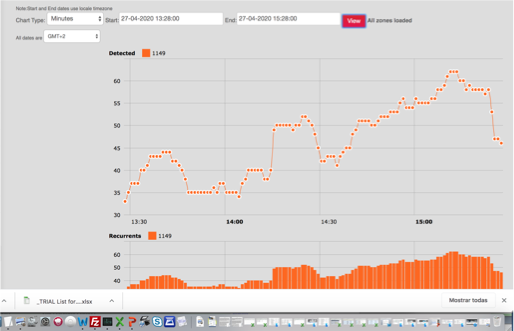
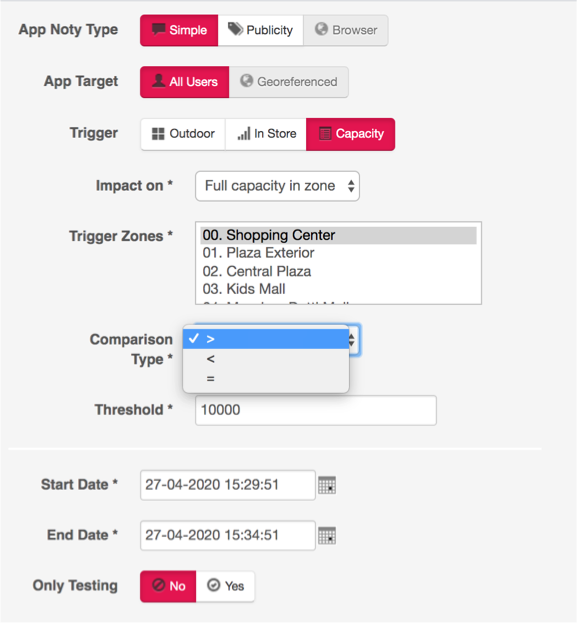
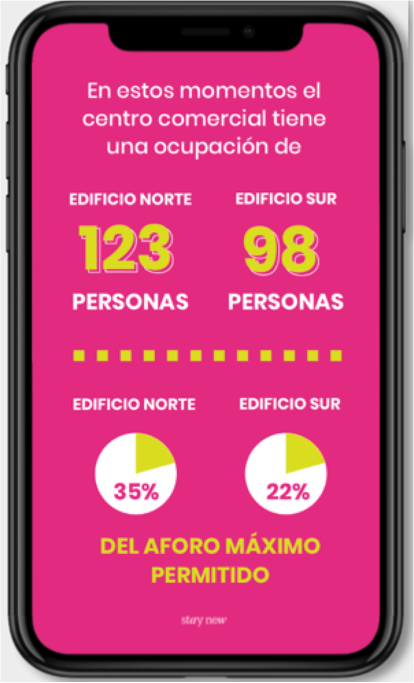
Seeketing offers a real-time occupancy control system applicable to any open or closed area, allowing managers and security personnel to receive programmable alerts—for example, when capacity is exceeded (e.g., above 40% or 50%). Optionally, this can be displayed on screens at the store entrance so the public can have the peace of mind of knowing that safety conditions are being met inside. It can also be integrated with the website, App, messaging, and other options.
The system is based on mobile device detection, configurable for any open or closed area.
The configuration allows for data to be updated every minute, or for hourly or daily counting data.
Managers have a real-time web dashboard that updates occupancy data every 1 or 3 minutes. The space can be divided into several zones or have a single dashboard for all zones and/or stores, with occupancy monitored for each zone.
SMS/Email alerts can be programmed so that managers or security personnel receive them when any occupancy level is exceeded in any zone.
This information is also available via API-Webservices-FullRest to be displayed on screens or on the Web/APP.
We View
Radio frequency detection by Seeketing Nodes can be combined with step detection (Step Counters) at doors, allowing for the distinction between entries and exits at each door. Optical-laser sensors for step counting are usually placed overhead, performing a real-time count of entries and exits while offering GDPR-compliant counting data, as no video cameras are used.
Use cases for optical laser sensors

Shopping malls
Sensors are used to measure store traffic or mall entrances.

Stores
In addition to entrances, they can be used to measure traffic in fitting rooms, footfall in front of displays, approximate dwell time at counters or checkouts, product corners, etc.
Transport
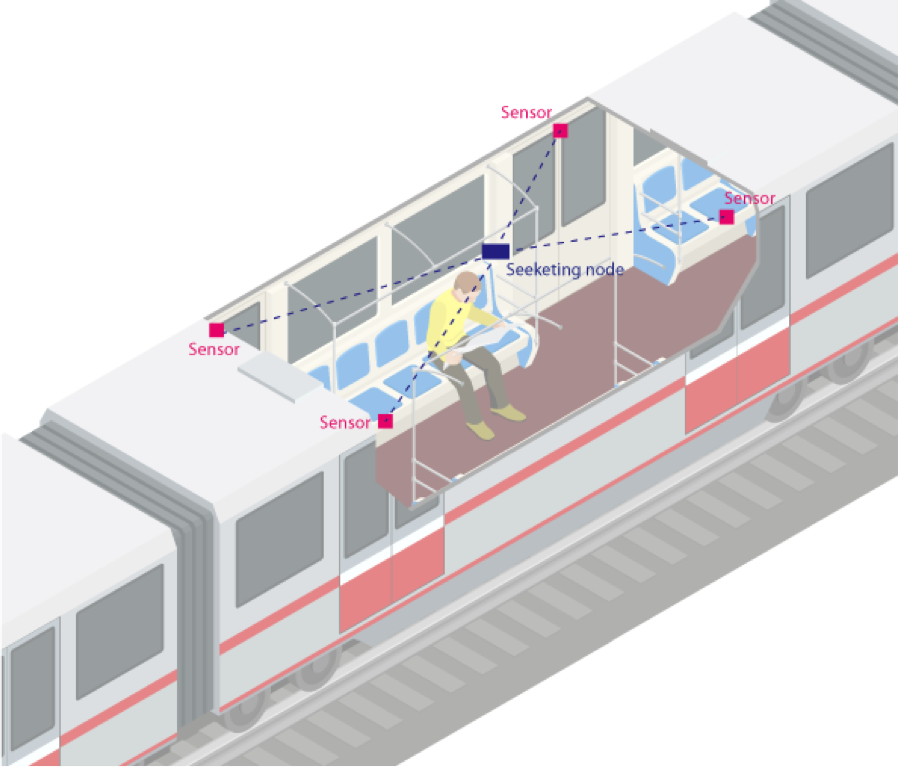
In metro and train vehicles, sensors measure entries and exits through the different doors, and a central Seeketing node can simultaneously detect mobile devices in the carriage to determine the occupancy in each carriage, the origin and destination of passengers, improve load distribution, etc.